Based on true events.
During the Dakota War of 1862, Sarah Wakefield survives captivity under the protection of Chaska, a Dakota man whose mercy defies both sides of a brutal conflict. Their bond —forged in violence, fear, and uneasy trust — saves her life. It will later cost him his.
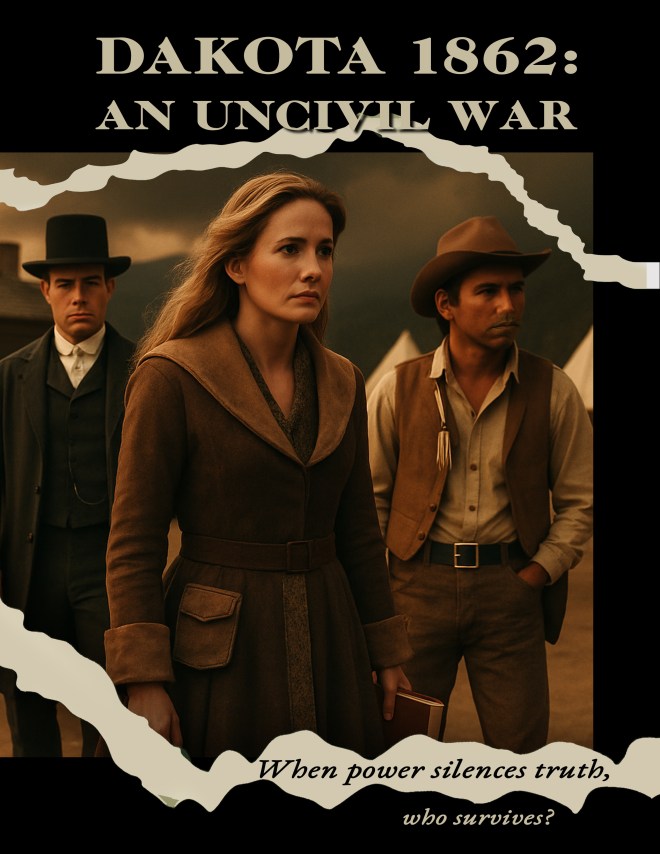
In 1857, Sarah Brown arrives in frontier Minnesota dreaming of becoming a writer, believing marriage to a respected doctor will buy her independence. Five years later, broken treaties and withheld annuity payments push the Dakota to the brink of starvation, and a single desperate act ignites war. Taken captive during the fighting, Sarah is spared under Chaska’s protection, forcing her to confront the humanity behind a conflict she was taught to see in absolutes.
When U.S. forces crush the uprising, hundreds of Dakota men are rushed through sham military tribunals designed to deliver swift punishment, not justice. At the urging of Bishop Henry Whipple, Sarah secretly records the proceedings in a last attempt to save innocent lives. But rumors of her relationship with Chaska — and her husband’s fear of public disgrace — turn her survival into suspicion. Chaska is arrested, denied a fair hearing, and ultimately executed after answering to another man’s name.
Refusing silence, Sarah publishes her account, becoming the writer she set out to be — preserving a counter-history that exposes how truth is crushed by power, and the personal cost of speaking it anyway. As the Dakota are banished from Minnesota some flee north into exile, laying the foundation for the Sioux Valley Dakota Nation in Canada. Sarah’s testimony becomes a record of lives the nation tried to forget — and a truth that crossed borders when justice would not.
 darlenemulligan.com